Animal entry usually shows up first as scratching or chirping inside the flue, a smell of decay, or a sudden loss of draft when the firebox is packed with sticks. Chimney swifts, starlings and pigeons drop nests into…
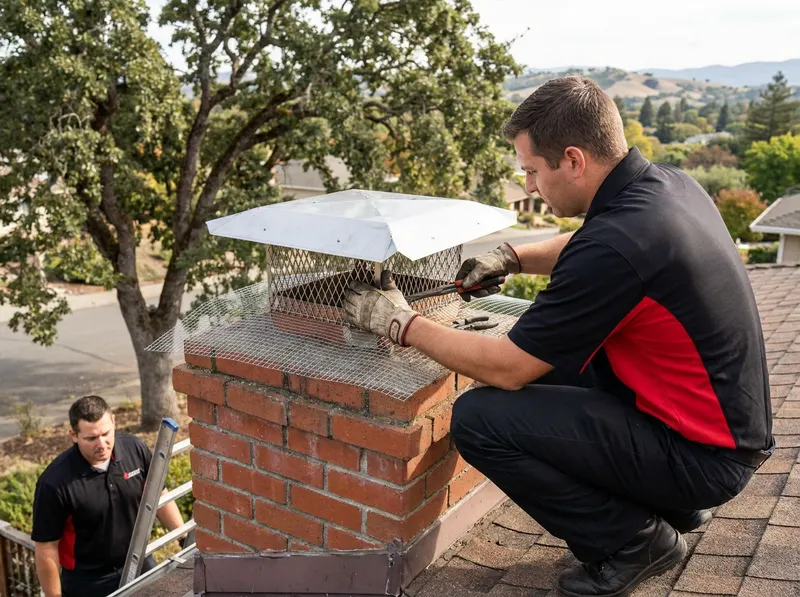
Animal entry usually shows up first as scratching or chirping inside the flue, a smell of decay, or a sudden loss of draft when the firebox is packed with sticks. Chimney swifts, starlings and pigeons drop nests into the smoke chamber; squirrels and raccoons climb down open flues on older Roseland and West End homes and use them to den. Removing a bird or removing a nest from a chimney is a physical cleanout job, the nesting material is pulled from the smoke shelf and flue, then the chimney is swept clean so no smoldering debris remains before the next fire. The Migratory Bird Treaty Act protects active nests of most native birds, so a live occupied nest is left until the young fledge unless the situation is an emergency; empty nests are removed on the spot.
Once the flue is clear, the fix that keeps animals out is a spark arrestor cap. A spark arrestor is a screened cap over the flue top that stops embers from escaping and stops animals from getting in, the same component NFPA 211 references for the flue termination, and the mesh size that catches sparks (3/8 to 1/2 inch) is also small enough to block birds and rodents. A stainless model resists Sonoma County's damp winters far better than the painted galvanized caps that rust through in a few seasons. A custom, ideally 316 stainless mesh animal spark arrestor is the option for exposed hilltop chimneys in Fountaingrove and Skyhawk, where 316-grade steel handles salt-air and moisture corrosion better than the 304 stainless used on standard off-the-shelf caps. Standard single-flue chimneys in Rincon Valley, Bennett Valley and Montgomery Village take a stock stainless cap; oversized crowns, multi-flue crowns and unusual clay tile sizes common on older Junior College District and Oakmont homes need a custom chimney animal guard fabricated to the crown dimensions.
To keep the raccoons out for good, the cap must be secured to the flue tile or crown, not just set on top, raccoons are strong enough to pry off a loose cap. If a raccoon has already denned inside, the animal is removed first, because sealing a live raccoon in creates a worse problem than the open flue. After any animal removal, the chimney is swept and inspected before it is used again; nesting debris and droppings are combustible and reduce draft, so the cleanout is part of returning the fireplace to safe operation. Homeowners in Coffey Park rebuilds and prep-for-sale listings often pair this with a CSIA-referenced Level 2 inspection, which uses a video scan of the full flue to confirm nothing was missed behind the nest. A free on-site estimate confirms the flue count, crown size and the exact cap needed before any work is scheduled.
Every job gets a firm, written price after a free on-site visit.
Tell us about your animal removal & spark arrestor job in Santa Rosa and we'll send a clear, written quote, usually the same day.
 Flueline Chimney Sweep