A chimney cap is the metal hood, usually galvanized steel, aluminum, or 304 stainless, that sits over the top of the flue and combines a rain cover with a spark-arrestor screen. When a winter storm off the Bennett…
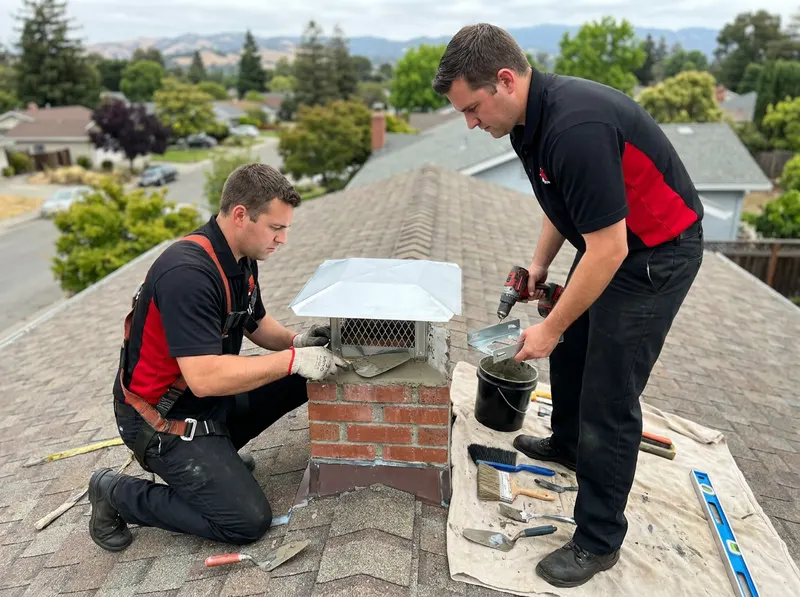
A chimney cap is the metal hood, usually galvanized steel, aluminum, or 304 stainless, that sits over the top of the flue and combines a rain cover with a spark-arrestor screen. When a winter storm off the Bennett Valley ridgeline or a gust across the exposed lots in Fountaingrove and Skyhawk blows a chimney cap back from the chimney, the flue opening is left uncovered. That exposes the flue to rain, roof debris, and nesting birds, and it removes the spark-arrestor screen that NFPA 211 credits with stopping embers from landing on a roof. A cap that is only loose or leaning is often a reattach job rather than a full chimney cap replacement.
The repair path depends on what the on-roof check finds. If the cap itself is straight and the screen is intact but the fasteners or the friction fit at the flue tile failed, reattaching the chimney cap with new stainless screws or clamps is the fit. If the cap is bent, rusted through, or the arrestor screen is torn, a chimney cap repair usually means replacing the cover, since a compromised screen no longer performs as an ember barrier. A single-flue home in Rincon Valley or Montgomery Village typically takes a standard bolt-on stainless cap; older Roseland and West End chimneys with a wide unglazed crown, or homes with two flues sharing one stack in the Junior College District, often need a multi-flue or full-width crown-mounted cover sized to the masonry.
Cap trouble and crown trouble travel together. The crown is the sloped concrete or mortar wash at the very top of the masonry; when it cracks, water reaches the flue and the top courses of brick, and a cap alone will not stop that. Chimney crown repair, from sealing hairline cracks to rebuilding a spalled wash, is handled as a separate line item and is called out in a Level 1 inspection under the CSIA standard, or a Level 2 inspection when a chimney is being scoped for a home sale in areas like Coffey Park or Oakmont. A damaged chimney cap is something a technician can take a look at and potentially fix on the same visit, or measure for a replacement if a stock cap does not match the flue.
Every cap job starts with a free on-site estimate: the flue is measured, the crown is checked, and the price is confirmed before any work begins, with photos of the damage shared in plain language. Phone (707) 802-1720. The reason the on-site step matters is fit; a cap that is even a half-inch off the flue outside dimension will not seat correctly, so exact measurement, not a phone guess, sets the final part and price.
Every job gets a firm, written price after a free on-site visit.
Tell us about your chimney cap repair & replacement job in Santa Rosa and we'll send a clear, written quote, usually the same day.
 Flueline Chimney Sweep