A chimney water leak rarely originates where the water shows up inside. The chimney crown, the concrete slab at the top, is the most frequent source, and hairline crown cracks widen through Santa Rosa's wet-then-dry…
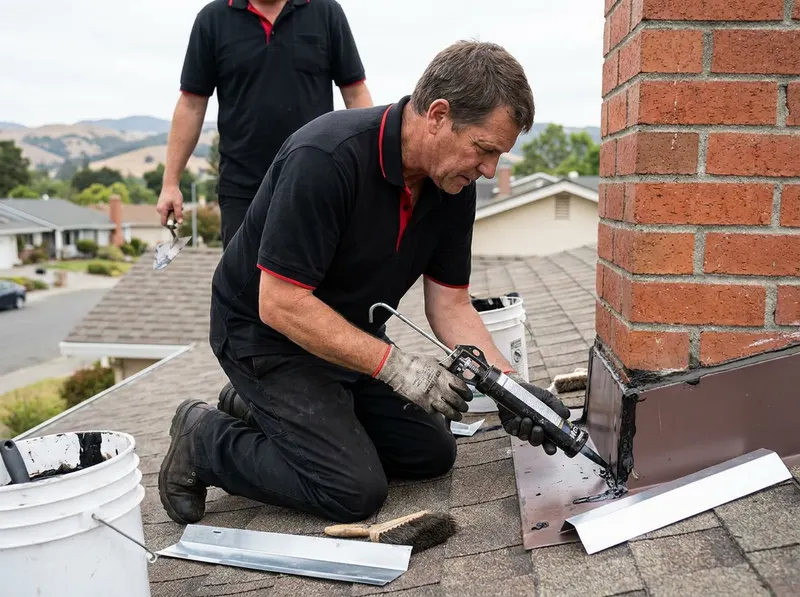
A chimney water leak rarely originates where the water shows up inside. The chimney crown, the concrete slab at the top, is the most frequent source, and hairline crown cracks widen through Santa Rosa's wet-then-dry cycle each year. Flashing failure is the second common cause: the metal seal where the chimney meets the roof plane lifts or corrodes, and roofs re-shingled in Coffey Park and Fountaingrove during rebuild years sometimes left older flashing beneath new material. The third cause is porous brick, which absorbs rain and wicks it inward on older homes near the West End and Railroad Square.
Waterproofing is a distinct step from repair and is not a substitute for it. A vapor-permeable masonry sealer, the type CSIA references for chimney use, lets trapped moisture escape while blocking rain from entering the brick face. Sealer applied over an active crack or open flashing gap will not stop that leak; the crack or flashing is corrected first, then the sealer protects the sound masonry going forward. That sequence matters: leaking chimney repair addresses the failed component, waterproofing prevents future absorption.
Deciding which service fits depends on the finding. If the inspection shows sound masonry with early surface absorption, common on hillside homes in Skyhawk and Oakmont exposed to wind-driven rain, waterproofing alone is the fit, and a quality sealer is rated by manufacturers for roughly 7, 10 years. If the crown is cracked or the flashing has separated, repair comes first and waterproofing follows. A recurring interior stain below a Rincon Valley or Bennett Valley firebox usually points to crown or flashing failure rather than brick, so a Level 2 inspection with the cap removed confirms the path before any sealer is quoted.
The process runs in order: (1) inspect the crown, flashing, cap, and brick and photograph each; (2) identify the single entry point, not a guess; (3) repair the failed component; (4) apply vapor-permeable sealer to sound masonry if warranted; (5) provide written findings with the photos. A free on-site estimate documents the leak source in plain language before any work is scheduled, so the repair line items match what the camera showed. Homes in Roseland, Montgomery Village, and the Junior College District with active interior water intrusion are inspected first, since standing moisture accelerates mortar decay and, on some flues, hidden creosote-plus-water corrosion. Phone: (707) 802-1720.
Every job gets a firm, written price after a free on-site visit.
Tell us about your chimney leak repair & waterproofing job in Santa Rosa and we'll send a clear, written quote, usually the same day.
 Flueline Chimney Sweep